
Education Plan
Entrepreneurship and Business
Empowering students to design, build, and launch real solutions through hands-on engineering challenges, entrepreneurial thinking, and real-world business skills.
Build Something That Matters
At Garfield County School Of Innovation, Entrepreneurship, Engineering and Business is more than a course — it is a mindset woven throughout the student experience. Students learn to identify real-world problems, prototype solutions, and bring ideas to life through a blend of design thinking, engineering principles, and business fundamentals.
Our world-class Engineering Lab is equipped with a 3-D printer, laser engraver, and CNC router — professional-grade fabrication tools that give students the hands-on experience to turn ideas into real, market-ready products.
From K–12 and into our concurrent enrollment pathways, students develop the skills that employers and universities value most: creative problem-solving, collaboration, persistence, and the ability to communicate a vision and execute on it.
A cornerstone of our program is active student participation in the Technology Student Association (TSA) — a national organization that gives students real-world competitive experience in engineering, technology, and innovation. TSA competitions bring classroom projects to life on a regional and national stage, and were a defining part of the success story at our predecessor STEM program.
TSA, FIRST Robotics, and BEST Robotics
Competition Is Our Sport
At Garfield County School Of Innovation, engineering and technology competitions are not extracurricular — they are central to who we are. Just as football, baseball, and volleyball define the culture of traditional schools, TSA, FIRST Robotics, and BEST Robotics will define ours. These competitions were a cornerstone of the success story at our predecessor STEM program, and they will be here too.
Every student is an active participant. Competitions give real-world stakes to classroom projects — students design, build, code, and present solutions that are judged against teams from across the region and nation. The experience builds technical skill, teamwork, resilience, and the kind of confidence that comes only from competing at a high level.
Six Core Pillars
Design Thinking
Students learn the human-centered design process — empathize, define, ideate, prototype, and test — applied to authentic community and industry challenges.
Engineering Fundamentals
Hands-on labs and project-based learning introduce structural, mechanical, electrical, and software engineering concepts across grade levels.
Business and Finance Literacy
Students explore market research, budgeting, pricing, and pitch development so their ideas are grounded in real-world viability.
Prototyping and Making
Our CTE Research Labs are equipped with a 3-D printer, laser engraver, and CNC router — giving students the professional-grade fabrication tools to turn concepts into tangible, market-ready products.
Pitch and Presentation
Students regularly present their work to panels of industry professionals, building confidence and communication skills alongside technical expertise.
Community Impact Projects
Capstone projects challenge students to address genuine needs in Garfield County, connecting learning to local economic and civic life.
Grade-Level Pathways
Foundations
Curiosity-driven making, simple machines, and introductory coding through play-based engineering challenges.
Exploration
Structured design-build projects, introduction to robotics, and early business concepts through school-based micro-enterprises.
Application
Advanced engineering electives, startup incubator experiences, and industry mentorship culminating in a senior capstone venture.
Concurrent Enrollment
College-credit courses in entrepreneurship and engineering technology through partnerships with regional higher education institutions.
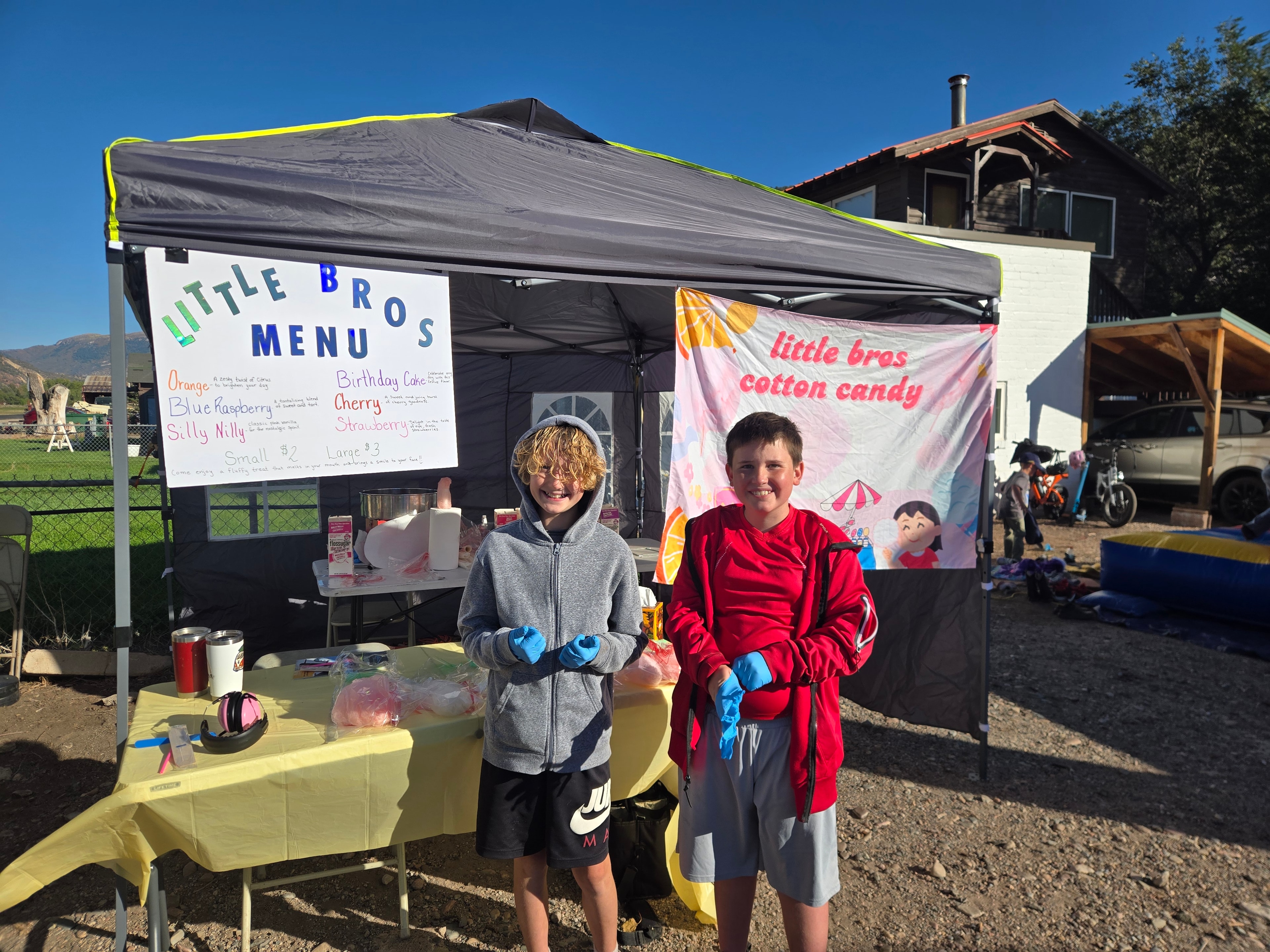
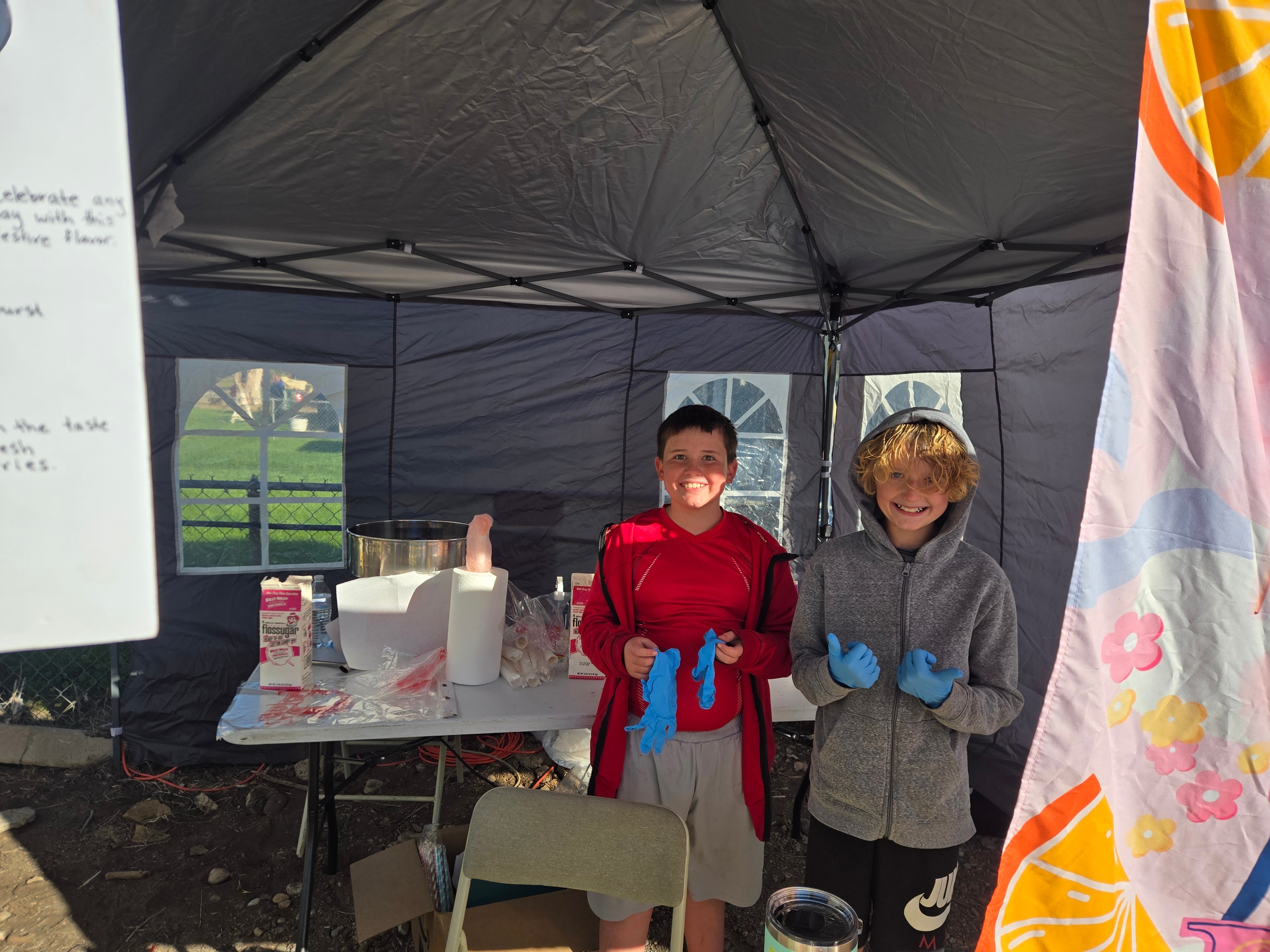
Young Entrepreneurs Tanner and Luca Bring Cotton Candy Business to the Aviation Expo
Thank you to young entrepreneurs and business owners Tanner and Luca of Little Bros. Cotton Candy, who sold their product at the Aviation Expo. The brothers ran their own booth, took orders, and served fluffy cones in Orange, Blue Raspberry, Silly Nilly, Birthday Cake, Cherry, and Strawberry. Small cones were $2 and large were $3.
They are exactly the kind of students Garfield County School of Innovation wants its entrepreneurship curriculum to encourage: young people who start a real business, show up for the community, and learn by doing. Paper-airplane contest winners redeemed their tickets at the Little Bros. booth.
$2
Small Cone
$3
Large Cone
Ready to Innovate?
Learn how Garfield County School Of Innovation prepares students to become the problem-solvers and builders our region needs.